How to Work Out Anion Gap With Units
What This Measurement Shows
The anion gap is a practical way to read electrolyte levels and determine whether the body’s acid-base balance may be disturbed. It is not a literal measurement of a single substance. Instead, it is a computed value that helps detect hidden ions in the blood when analyzing a standard electrolyte panel.
Clinically, the anion gap is commonly used to assess acidosis. This is a metabolic disturbance in which too much acid builds up or too much bicarbonate is lost. Because the calculation uses routine blood test results, it acts as a valuable assessment tool in laboratory interpretation and clinical read more evaluation.
An Anion Gap Calculator helps users determine anion gap quickly and consistently, especially when they want anion gap with units explicitly shown. That matters because the value is only meaningful when the reference ranges and context are understood accurately.
In plain terms, the anion gap reflects the relationship between positively charged and negatively charged particles in blood. The main electrolytes involved are sodium, chloride, and bicarbonate. When the balance shifts, the result can point toward an electrolyte imbalance, an acid-base disorder, or a more specific condition such as high anion gap clinical significance anion gap metabolic acidosis.
Anion Gap Calculation and Calculation
The standard anion gap equation is based on three common serum measurements: sodium, chloride, and bicarbonate. It is calculated as:
Anion gap = sodium − (chloride + bicarbonate)
Some laboratories may use a marginally different version that includes potassium, but the usual clinical formula uses serum sodium, serum chloride, and serum bicarbonate. This is the formula most users expect from an Anion Gap Calculator.
To calculate anion gap one step at a time:
- Use the serum sodium value.
- Combine the serum chloride and serum bicarbonate values together.
- Remove that total from sodium.
As an example: if sodium is 140, chloride is 102, and bicarbonate is 24, the calculation is 140 − (102 + 24) = 14. This is the main formula, but interpretation depends on the units, the reference range, and whether albumin correction is needed.
Because anion gap is a computed number rather than a directly measured electrolyte, it should always be interpreted alongside the blood chemistry pattern. A apparently normal number does not always rule out disease, and an abnormal result does not always mean a serious disorder without additional context.
Measurement Units Used in Anion Gap Calculation
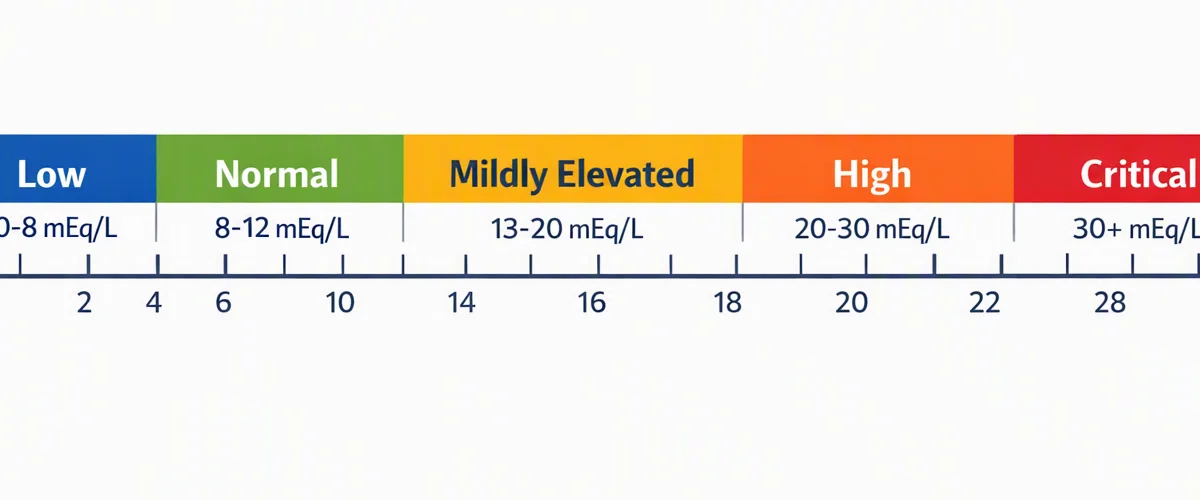
Anion gap is typically reported in mEq/L or mmol/L. In many cases, these values are usually numerically equivalent for the electrolytes used in the formula, which is why many clinicians and lab reports treat them similarly. That said, users should always check the laboratory units shown on the report before making assumptions.
The calculation is based on serum chemistry, so the unit formatting matches how the laboratory measures the electrolytes. Sodium, chloride, and bicarbonate are often listed as either mEq/L or mmol/L, depending on the analyzer and reporting system.
For most routine interpretation, anion gap with units does not require conversion if all components come from the same lab report. What matters most is consistency. A calculator should use values from the same electrolyte panel and preserve the same units in the final answer.
Here are the practical takeaways:
- mEq/L is common in clinical chemistry reporting.
- mmol/L is also frequently used and often matches the numeric result.
- Mixed units can lead to errors, especially if a value is copied incorrectly.
When using an Anion Gap Calculator, always check the units before reviewing the interpretation. Even though the formula is simple, the reliability of the result depends on accurate blood chemistry data and correct laboratory units.
Normal Anion Gap Range and Lab Values
The typical range for anion gap differs by laboratory because different analyzers and reference methods may produce slightly different results. That is why you should rely on the lab’s lab range rather than a single universal number.
In many settings, the anion gap is viewed normal when it stays within a modest range centered around the low teens, but the exact reference values differ. Some reports also adapt interpretation based on whether potassium is included in the formula. Because of these differences, the numeric result should consistently be compared with the local lab’s published values.
Albumin plays an key role in the normal range. Since albumin is a major unmeasured anion, a low albumin level can make the anion gap appear reduced than expected. This is why albumin correction may be needed when interpreting blood test results in patients with low albumin.
The corrected anion gap is often more informative than the raw number when albumin is reduced. This adjustment helps prevent missed recognition of an underlying acid-base disorder. If albumin is low, a seemingly normal anion gap can mask a real abnormality.
Lab values should always be interpreted in context:
- Use the lab-specific reference range.
- Confirm whether the result is uncorrected or corrected.
- Review albumin level before drawing conclusions.
High Anion Gap vs Normal Anion Gap Metabolic Acidosis
One of the most important uses of the anion gap is separating high anion gap metabolic acidosis from normal anion gap metabolic acidosis. Each are types of metabolic acidosis, but they stem from varied mechanisms and therefore point to other causes.
In high anion gap metabolic acidosis, extra acids gather in the body. These acids are not directly measured in the routine electrolyte panel, so the anion gap widens. Common examples include lactic acidosis, ketoacidosis, renal failure, and toxin ingestion.
In normal anion gap metabolic acidosis, bicarbonate is depleted and replaced by chloride, so the gap remains within the expected range. This is often called hyperchloremic metabolic acidosis. The acid-base balance is still abnormal, but the pattern is unlike from high-gap states.
Lactic acidosis is a major cause of high anion gap metabolic acidosis. It can occur when tissues are not receiving enough oxygen or when metabolism is severely stressed. Ketoacidosis is another classic cause, especially when the body produces high levels of ketones. Renal failure can also cause build-up of acids because the kidneys cannot remove them effectively.
By contrast, normal anion gap metabolic acidosis is often associated with bicarbonate loss from the gastrointestinal tract or kidneys. The chloride shift helps maintain electrical neutrality, so the gap may seem normal even though the patient has a serious acid-base disorder.
Frequent Causes of an Atypical Anion Gap
An altered anion gap can indicate several important clinical disorders, but the interpretation depends on whether the result is high or decreased. For clinical practice, the most clinically significant abnormality is a elevated value.
Ketone-related acidosis is a typical cause of high anion gap. This may develop in diabetes, starvation, or other metabolic states where ketone production rises. These acids increase the gap because they add unmeasured anions to the bloodstream.
Impaired kidney function can also raise the anion gap by impairing acid excretion. As kidney function declines, acids collect, and the calculated gap increases.
Exposure to toxins is another key cause. Certain toxic substances produce unmeasured acids or interfere with metabolism, leading to high anion gap metabolic acidosis. In clinical evaluation, this possibility should be kept in mind when the blood chemistry pattern is unexpected or marked.
Lactic acidosis is often seen in acute illness, poor tissue perfusion, or systemic stress. It is one of the most important causes to detect quickly because it may indicate a severe underlying problem.
Bicarbonate loss is more often linked to a normal anion gap state. While the gap may not be elevated, the bicarbonate level is lowered, and the clinical impact can still be significant.
Additional causes and factors can include mixed acid-base disorders, medication effects, and changes in serum electrolytes. This is why an raised or decreased anion gap should never be interpreted in separation.
How to Understand Results Properly
Accurate interpretation involves more than checking a value against the reference range. A careful clinical interpretation should consider albumin, electrolyte findings, and the probable acid-base disorder.
First, assess albumin correction if the patient has low albumin. Because albumin contributes to the anion gap, reduced levels can hide a clinically relevant elevation. The corrected anion gap offers a better estimate of the true acid-base status in many cases.
Next, look for a chloride shift. If bicarbonate is low and chloride is high, the pattern may indicate normal anion gap metabolic acidosis. This does not eliminate the possibility of illness; it simply suggests a different mechanism than high-gap states.
Third, connect the result with the broader acid-base disorder. The anion gap is one part of the story. It should be interpreted with pH, bicarbonate, clinical symptoms, and other laboratory interpretation details when available.
A useful approach is to think in layers:
- Is the anion gap high, standard, or low?
- Are sodium, chloride, and bicarbonate consistent with one another?
- Is albumin decreased enough to warrant correction?
- Does the overall pattern fit the patient’s presentation?
Using this approach helps reduce common errors in interpretation. A result should support the diagnosis, not substitute for clinical judgment.
When to Use an Anion Gap Calculator
This Anion Gap Calculator serves as most useful if you have lab values from an electrolyte panel and want a rapid, dependable way to calculate the anion gap. It is particularly useful during a medical assessment if rapid blood chemistry review is needed.
Rely on a calculator when reviewing lab values that include sodium, chloride, and bicarbonate. These results are usually available in a standard electrolyte panel and can be entered directly without calculation mistakes.
A calculator is also useful when comparing multiple sets of blood test results over time. Trend analysis can reveal whether the gap is increasing, decreasing, or remaining stable. That can be helpful in monitoring treatment response or identifying a worsening metabolic disturbance.
In clinical workflows, the calculator serves as a practical support tool for laboratory interpretation. It can help clinicians, students, and patients understand the relationship between serum electrolytes and acid-base balance. It is not a substitute for professional diagnosis, but it can improve clarity when reviewing blood chemistry results.
Use it particularly when:
- Evaluating possible metabolic acidosis
- Assessing high anion gap metabolic acidosis
- Assessing low albumin and applying albumin correction
- Checking an unexplained electrolyte imbalance
Frequently Asked Questions
What is the formula for calculating anion gap?
The standard formula is sodium minus the sum of chloride and bicarbonate. In equation form, it is anion gap = sodium − (chloride + bicarbonate). This is the most common formula used by an Anion Gap Calculator.
What units are used for anion gap?
Anion gap is commonly reported in mEq/L or mmol/L. In many cases, the numeric result is the same in both formats, but you should always follow the laboratory units shown on the report.
What is a normal anion gap range?
The normal range depends on the laboratory reference range and the testing method used. Always compare the result with the local reference values rather than assuming one universal normal range.
How does low albumin affect the anion gap?
Reduced albumin can lower the observed anion gap because albumin is a key not directly measured anion. This is why albumin correction is necessary; the adjusted anion gap may reveal an problem that the uncorrected value hides.
What does a high anion gap indicate?
A high anion gap often points to high anion gap metabolic acidosis. Frequent causes include lactic acidosis, ketoacidosis, renal failure, and toxin ingestion. The result should always be assessed with the full clinical picture and other blood test results.